Category: news

  • Adding Gaydio to Wrexham, Chester and Liverpool

    We’re adding Gaydio to the Wrexham, Chester and Liverpool multiplex for the Summer.

    It’s on-air to coincide with Gaydio being media partners with Liverpool Pride, a festival which celebrates Liverpool’s Lesbian, Gay, Bisexual and Transgender (LGBT) culture. This year’s festival is on August 3rd will see a mix of emerging artists, established artists as well as a super hero theme.

    The station will be on-air from the 29th July for 6 weeks.

    Adding Gaydio is hopefully one of many new services (full time and temporary) that we’ll add to this and out other multiplexes. We think one of the benefits of digital radio is the ability to be fleet of foot and reflect what’s happening locally. We’re always keen to hear from other operators who want to broadcast either short term or long term. You can find out more here.

  • New Multiplex Updates

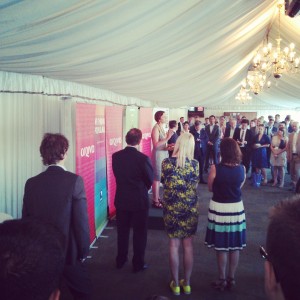
    IMG_20130709_165736I’m posting this just after attending a Parliamentary Reception for digital radio. The BBC, commercial radio and Government spoke about digital radio’s successes which included:
    • 50% of listeners tuning to digital radio every week
    • 40% of all new cars have digital radio as standard
    • Growing local and national DAB coverage

    On the last point, you might have seen that Nicky’s just posted status updates for the Gloucestershire, Herefordshire and Worcestershire and Mid and West Wales multiplexes in the blog. We’re pleased with the progress that we’re making with these, even if we have to jump through some new hoops that BT have put in our way.

    Geting multiplexes on-air involves many different people and organisations including Ofcom, service providers and transmitters contractors but also site owners and the people that own all the different fibre and copper between stations and transmitters.  And if you’ve had trouble changing broadband providers, you know what dealing with different telecoms companies is like. A multiplex launch is a bit like doing 20 of those simultaneously.

    We are excited about taking our multiplex network from 1 to 4 by September – it’s a busy time, but we’re looking forward to bringing more digital radio to people across the country. We should have some Surrey news in the coming weeks and then later on further information about our other areas. The launch of four networks this year puts us ahead of what Ofcom asked us to launch as part of the MoU discussions and we continue to work on ways to develop sustainable businesses for all of our licence areas.

  • WCL Update

    Apologies for the radio silence, the status of the multiplex build has been changing quite frequently over the past few weeks and we haven’t wanted to put up lots of conflicting messages.

    We’re very close to launch but have a very basic technical problem to overcome before we do that. Sadly it’s not very exicting, it’s very dull. What we need to do is install a microwave link between two sites to get the ETI feed (that’s all the radio stations) to the transmitters.

    The sites that we’re broadcasting from have lots of other users on them and there’s special agreements needed to send our guys up them. The team we’re using for this are specialist riggers who, as they’re great, are very busy (oddly doing lots of 4G installations at the moment).

    We’ve had a couple of bumps with getting everyone’s timings to work together – ours, our riggers, our transmission contractors, the site owners and the site’s users – which means we haven’t been confident to talk about launch dates.

    I know this is incredibly frustrating for you and it is to us and our service providers as well. When we’ve got some firmer information – and dates – we’ll share them here.

  • Muxco WCL: Update 28th November 2012

    Here’s another update on the progress for our Wrexham, Chester and Liverpool multiplex.

    We’re pleased to announce that we now have transmitters installed and powered at two of our three sites – Wrexham Rhos and Moel-y-Parc.  In addition, the steel work for the mast to support the antenna has been delivered to St John’s Beacon and is awaiting fitting. We’re pushing to get as much done as possible on masts before the seasonal “freeze” on planned work around the Christmas period.

    This week also sees multiplexer bay and equipment delivered to our transmission HQ in London and we’re finalising the configuration details. This includes kbit/s, labels, links to FM (where needed) and several other variables to ensure stations present in the way they and their listeners would like.

    We’ve also started hooking up service providers to the network, with three down and three more to go.

  • Muxco WCL: Update 20th November 2012

    The transmitter builds are progressing but telecoms delays continue to hamper our ability to currently announce a launch date.

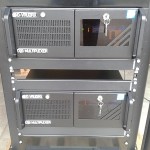
    More positively, we’re excited to see our multiplexers commissioned and installed into the rack.  Here are a couple of pictures.  You can see that there are two IPCs – one is the main and one is the backup; they’re otherwise identical.  The multiplexing software is loaded up and all the information on the services is programmed in.   The other things in the rack are GPS clocks and routers.  This is the heart of our multiplex and we can’t wait to bring the whole thing to life as soon as we can.

  • RAJAR reports increased DAB reach and listening

    RAJAR has today released audience research for the Quarter ended March 2012 and its great to see further strong growth in digital radio listening.

    Key headlines for RAJAR are:

    • 45% of the population has tuned in via any Digital platform
    • 22.1 million adults have access to a DAB receiver up 12% year on year
    • For the first time there has been more than 200 million hours recorded for DAB listening

    Listening to radio via a digital platform in terms of weekly reach has increased by 5% year on year, with 23.5 million people now tuning in to radio via a digitally enabled receiver (DAB, DTV, internet) each week (up  from 22.3 million in Q1 2011).

    The share of all radio listening via a digital platform is now 29.2% (against 26.5% in 2011), with DAB’s share increasing by 15% to 19.1% of all listening (16.7% in 2011).

    The share of all listening through DTV is now 4.4%, with Internet’s share at 3.9%.


  • Then and Now.

    Last week Pure held an event to celebrate 10 years of making beautiful functional DAB radios. Matt, Greg and I attended and enjoyed seeing the display of Pure Evokes from across the last decade, from the first blue nylon-fronted limited run to the smart 2012 union flag issue. We were pleased to celebrate the distance covered with the team from Pure and toast their successes.

    It was appropriate timing for us, looking back and forward – not least because earlier the same day I’d had our kick off meeting with our transmission subcontractor, lining things up for the launch of Muxco WCL later this year.

    At GCAP (as was) between 2001 and 2007 Greg Matt and I operated over 20 DAB multiplexes and oversaw the launches for a large amount of those.

    I became pretty used to launches and multiplexes but that was then. All sorts of things have changed, not always the obvious stuff.  Here’s an example.

    The more multiplexes you launch the more transmitters there are to inexplicably go on the blink at odd times, like, say 3am.

    Back then in 2002 or 2003, as now, I’d always have the phone to hand, and after waking with a jolt to hear what had gone wrong, I would notify station engineers instantly, them similarly half asleep. I think it is fair to say they didn’t always give a flying toss that a DAB transmitter that covered 6 sheep in a field had gone down 3db for four minutes. The sheep could still tune in on FM if they so chose and that was the engineers priority. And could I please get off the phone because did I know it was 3am? Consequently we got better at managing that information in a way that suited the radio stations who are our clients, and the ones who pay the bills.

    However in this new landscape here in 2012 a station engineer might actually care very much that his DAB feed is affected, even a small amount. DAB is of greater importance than ever and so I can’t approach things the same way as we used to. We will be using new telemetry, which will be customised to our new requirements – so what requirements would we like?

    The radio stations, our clients will be the ones at the centre of this process.  Whilst our transmission team crack on with the big pointy mast side of the build, I’ll be getting in touch with the radio station’s tech teams over the coming weeks to work through some practical stuff, and to get a feel for what they need from us.

  • In-Car Digital Radio

    Generally whenever I talk to people who’ve got in-car DAB they rave about it. Sometimes though I get a big diatribe abut how the signal’s a bit patchy. Oddly though the people I talk to all drive in the same place. A bit of digging and it’s always people who have the plug in adapters that have the trouble. Whilst they can be great devices, you need the aerial bit installed properly to get all the digital radio benefits.

    Today, Digital Radio UK have published some details about Volkswagen’s in-house research into digital radio that somewhat proves the point about the need for properly installed sets. Some interesting facts came out of the research.

    They talked to 1,000 of their DAB in-car users, 82% said that reception’s good or very good. 72% said they would be disappointed if they no longer had in-car DAB and 50% went on to say that they wouldn’t buy a car without digital radio. When asked what people liked about it 70% said sound quality and 63% new content.

  • London’s Digital Boost

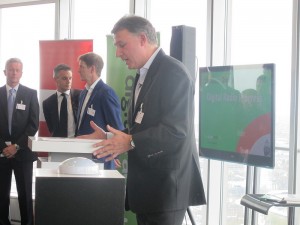
    I went along to an event at BT Tower this week to ‘switch on’ an upgrade to London’s DAB infrastructure.

    Each area in the country has specific issues based on topography or land use and London’s no exception. Central London suffers from a vast array of buildings of different types which cause DAB signals to be less than robust than those further out fed by the same transmitters. Digital Radio UK have co-ordinated an additional transmitter on BT Tower, alongside some additional power upgrades around the network to provide further resilience.

    It’s seen all the multiplex operators work together – London 1, 2 and 3 alongside D1 and the BBC to make this happen.

    Whilst this may not affect where you live, it’s an important demonstration of the industry’s desire to ensure that digital radio’s availability continues to improve.

    There’s more information on Digital Radio UK’s website.

  • June Update

    We can understand that from the perspective of local listeners, the launch dates of both our and other multiplex operator’s licences have come and gone frustratingly with not much information available about the reasons for these delays.

    We would like to offer another (possibly equally frustrating) update to assure you that the radio silence is a result of continued workings behind the scenes and not a result of us wandering off to do something else.

    As we have detailed before, since the licence awards there have been a number of changes to the regulatory environment which meant we had to begin a process of reviewing all of our plans. As Ofcom talk about in their latest consultation on DAB Planning, there is significant discussion about the coverage of each multiplex and the potential frequencies they will broadcast on. The aim behind this is to enable multiplexes to better match FM coverage and how to increase power levels that ensure the most robust reception for listeners. Additionally, there is a desire from Government to increase the overall coverage from existing and new multiplexes. All multiplex operators have entered into discussions about how this can be achieved (and paid for). The net benefit of all these discussions will be even better digital radio for listeners.

    Getting through these discussions is tough. Multiplex operators, the BBC, the Government and Arqiva are all working together on a plan that will require big changes to their own business plans and transmission arrangements. At the same time, all changes have a knock-on effect to everyone. It’s a large puzzle that lots of people are working on and there are many iterations of the plan each week.

    The progress is however good and we’re confident that we can get a result that’s even better for listeners and provides a network and infrastructure that’s attractive and affordable for service providers.

    We’ve had a number of, understandably, angry emails suggesting that if we are not going to launch the multiplexes, we should hand the licences back. It is our absolute intention to launch the multiplexes, and the reality is that any new multiplex operator would be in exactly the same position, navigating the discussions with the industry to get the new local plan sorted out. Indeed, Now Digital, who also won some multiplexes in the last round, are in the same position as MuxCo.

    From a business perspective, both MuxCo and our partners remain supportive of DAB and are keen to launch. We are comfortable with the financial structure of the multiplexes and that the multiplex will provide affordable and robust coverage for service providers. We also have a number of plans for new services that we are frustrated we cannot currently develop and would like to talk more about!

    What we do know, however, is that the discussions taking place are going to put local digital radio in an even better position for listeners and service providers and when we’re in a position to launch, we will.